Blogs
When One Word Changes Everything: A Live Case Study in Advertising Ethics
(A real-world lesson for management and marketing students)
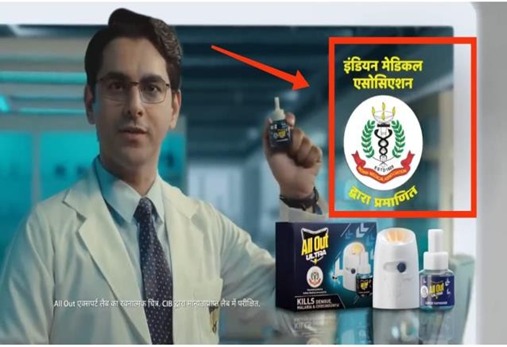
Before- The ad included “IMA द्वारा प्रमाणित”

After- The ad was modified with “IMA द्वारा रेकमडेंेड”

Dr. Vijay Uprikar
Faculty of Marketing
Datta Meghe Institute of Management Studies
When One Word Changes
Everything: A Live Case Study in Advertising Ethics (A real-world lesson for management and marketing students)
Marketing textbooks often teach us about ethics, consumer perception, and regulatory frameworks. But the most powerful lessons do not always come from theory. Sometimes, they come from simply watching an advertisement carefully.
This blog reflects on a real-world advertising observation involving well-known household brand All Out and how subtle differences in wording led to meaningful regulatory action by Advertising Standards Council of India (ASCI).
The purpose here is not to accuse the brand, but to learn how language, interpretation, and authority operate in marketing communication.
Faculty of Marketing
Datta Meghe Institute of Management Studies
When One Word Changes
Everything: A Live Case Study in Advertising Ethics (A real-world lesson for management and marketing students)
Marketing textbooks often teach us about ethics, consumer perception, and regulatory frameworks. But the most powerful lessons do not always come from theory. Sometimes, they come from simply watching an advertisement carefully.
This blog reflects on a real-world advertising observation involving well-known household brand All Out and how subtle differences in wording led to meaningful regulatory action by Advertising Standards Council of India (ASCI).
The purpose here is not to accuse the brand, but to learn how language, interpretation, and authority operate in marketing communication.
Case: All Out – “Recommended” Vs “प्रमाणित” The Observation
In the All-Out mosquito repellent advertisement:
The visual text stated: “Recommended by IMA”
The Hindi text and voice-over said: “IMA द्वारा प्रमाणित”
At first glance, this may appear minor. But from a marketing and consumer psychology lens, it is not.
Why the Difference Matters
“Recommended” suggests an endorsement or opinion.
“प्रमाणित” (certified) implies formal testing, validation, or approval.
These terms are not interchangeable. They carry materially different meanings for the average consumer- especially in health-related products where authority and trust strongly influence decisions.
Regulatory Outcome Upon review, ASCI concluded that this inconsistency could mislead consumers regarding the nature of the endorsement. Although the brand had an agreement allowing use of IMA’s name and logo, the Hindi term “प्रमाणित” (certified) was misleading, since IMA’s role was only to recommend, not test or certify the product.
(YouTube Link- https://youtu.be/Iw0fja5UZH4?si=AXK_CwqHbA8bQ0Zv) ASCI concluded that this difference between “recommended” and “certified” can mislead consumers and has directed the advertiser to modify or withdraw the ad by November 5, 2025.
Eventually, the ad was corrected. (As reflected in above “Before” and “After” Images) What Management Students Must Learn from the Case? This case is insightful and powerful and not a hypothetical one. It happened in real time, in real markets, involving one of the national reputed brands. Key Learning Outcomes
1. Words Are Strategic Assets Language is not decorative in advertising. A single word can: alter consumer perception
elevate trust unfairly
trigger regulatory scrutiny
Translation Is Not Neutral
For bilingual or multilingual markets like India:
Visual and audio claims must be meaning-consistent across languages.
A mismatch can mislead even if each element seems acceptable in isolation.
3. Authority Bias Is Powerful Logos of professional bodies and authoritative phrasing amplify credibility. Marketers must exercise heightened responsibility when using such cues. Self-Regulation Works
The case demonstrates how advertising self-regulation functions when:
consumers are observant, and
concerns are raised constructively.
ASCI’s process shows that correction and not confrontation is the goal.
5. Marketing Is a Social Responsibility Ethical marketing is not only about compliance. It is about respecting consumer interpretation, not just legal wording.
Closing Reflection These observations were not made to accuse the brand. But, it reminds us that: Ethical marketing is not about intention alone but it is about interpretation.
When consumers, educators, and regulators engage constructively, the marketplace becomes clearer, fairer, and more trustworthy.
That is perhaps the most valuable lesson management students can take away.
At first glance, this may appear minor. But from a marketing and consumer psychology lens, it is not.
Why the Difference Matters
These terms are not interchangeable. They carry materially different meanings for the average consumer- especially in health-related products where authority and trust strongly influence decisions.
Regulatory Outcome Upon review, ASCI concluded that this inconsistency could mislead consumers regarding the nature of the endorsement. Although the brand had an agreement allowing use of IMA’s name and logo, the Hindi term “प्रमाणित” (certified) was misleading, since IMA’s role was only to recommend, not test or certify the product.
(YouTube Link- https://youtu.be/Iw0fja5UZH4?si=AXK_CwqHbA8bQ0Zv) ASCI concluded that this difference between “recommended” and “certified” can mislead consumers and has directed the advertiser to modify or withdraw the ad by November 5, 2025.
Eventually, the ad was corrected. (As reflected in above “Before” and “After” Images) What Management Students Must Learn from the Case? This case is insightful and powerful and not a hypothetical one. It happened in real time, in real markets, involving one of the national reputed brands. Key Learning Outcomes
1. Words Are Strategic Assets Language is not decorative in advertising. A single word can:
3. Authority Bias Is Powerful Logos of professional bodies and authoritative phrasing amplify credibility. Marketers must exercise heightened responsibility when using such cues.
5. Marketing Is a Social Responsibility Ethical marketing is not only about compliance. It is about respecting consumer interpretation, not just legal wording.
Closing Reflection These observations were not made to accuse the brand. But, it reminds us that: Ethical marketing is not about intention alone but it is about interpretation.
When consumers, educators, and regulators engage constructively, the marketplace becomes clearer, fairer, and more trustworthy.
That is perhaps the most valuable lesson management students can take away.